-
by
Nduta Waweru
| Name of Youth Empowerment Center, Youth Group, Youth Club or Youth-led Organization | WONDER WOMAN ELGON |
|---|---|
| Email Address: | Email hidden; Javascript is required. |
| Phone | +254790060094 |
| Location (City or Town): | MT. ELGON |
| County | Bungoma |
| Team Leader: | CHEPKURUI KAREN |
| Innovation Title | KUZA SHE INITIATIVE |
| Focus Area | Promoting Sexual and Reproductive Health and Rights (SRHR), including maternal health |
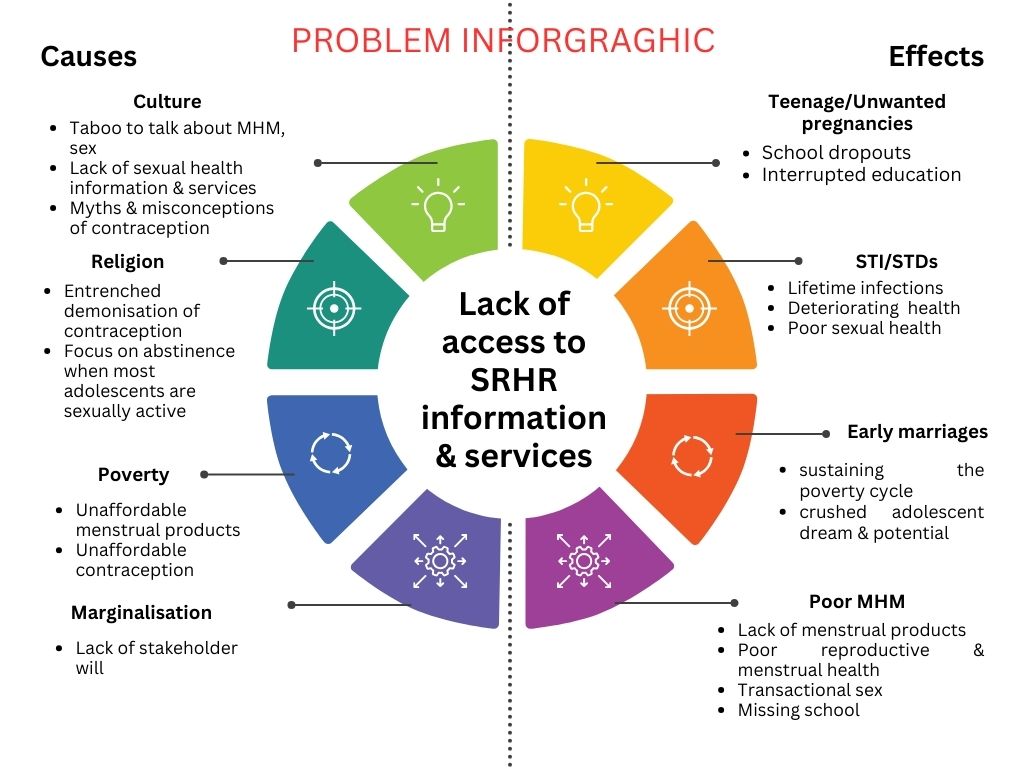
| Problem Statement: | Lack of access to SRHR information and service leading to high number of teenage pregnancies in Mt. Elgon sub-county, Bungoma County, which is made up of politically, economically, and socially marginalised group of people with a high percentage living below the poverty line. This lack of access to SRHR combined with poverty, has greatly contributed to the high cases of teenage pregnancies, school dropouts and early marriages in the sub-county. In desperation, a percentage of the girls are forced to engage in transactional sex while others miss up to 5 school days due to lack of menstrual pads. |
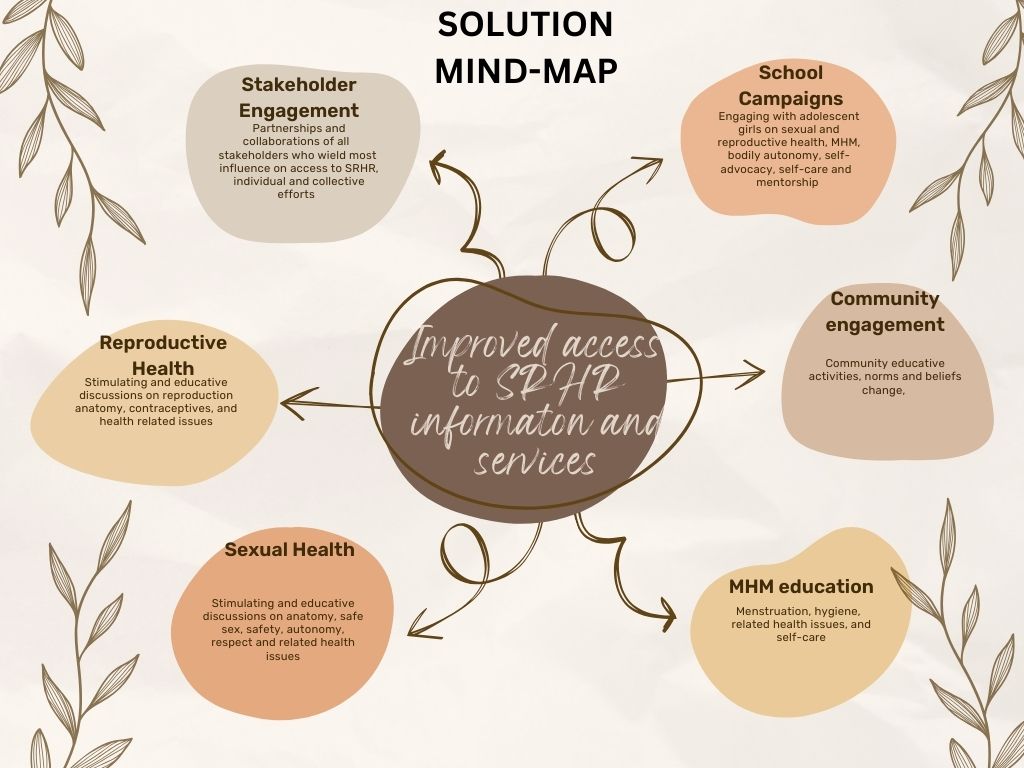
| Innovation Description: | Kuza SHE initiative seeks to address two aspects of sexual and reproductive health, lack of access to credible information on sexual and reproductive health and lack of access to services and products. Kuza SHE starts its intervention at the bottom of the high school pyramid – form one, through facilitating open and stimulating discussions around menstrual hygiene management, safe sex, contraception. Kuza SHE engages both girls and boys because most schools in the region are mixed. These discussions are a pathway to improving access to SRHR information and the goal is to ensure as many girls have the necessary information to avoid teenage pregnancies, protect themselves from STIs/STDs, finish their high school education, and pursue the chance at living to their lives to full potential. In the same breath, to close the gap in lack of access to services and products, Kuza SHE donates reusable menstrual kits that not only offer a sustainable solution but can last for up to 2 years. Some girls miss up to 5 days of school during menstruation due to lack of menstrual pads and some are forced into transactional sex to acquire these products. These kits being reusable, ensure that the girls can attend school during their menstrual cycles without disruption, and enjoy every bit of their learning experience with little to no risk of ‘embarrassing leakages’. Concurrently, Kuza SHE runs activities to identify healthcare providers who can provide adolescent-friendly services that include contraception, sexual health services such as STI/STD screening. Following this identification, this information is shared with the girls during and at the end of the intervention. By equipping them with this knowledge, we empower them to make informed choices about their sexual and reproductive health, fostering a safer and more informed community for all. |
| Uniqueness and Innovation: | What sets the Kuza SHE initiative apart is its distinctive approach. We start our interventions with the lowest class in high school and follows up with the same class up until they complete high school. For instance, last year, 2022, we engaged with form 1 in four schools who are now in form 2 and this year, 2023, we went back and facilitated two sessions, one with the new form 1 and one with form 2. The session with form 1 started with fundamentals of SRHR and the one with forms 2 was a follow up on previous discussions and introduction of new content on SRHR. This follow- up through the entire four years in high school, ensures that we can monitor and observe the impact of the continuous SRHR learning. The other unique thing is that the intitiative engages both girls and boys at the same time. |
| Impact and Scalability: | The potential positive impacts of Kuza SHE includes reduced cases of teenage pregnancies consequently, a decrease in school dropouts, improved menstrual hygiene management and a shift towards respect between the girls and boys and in relationships. Armed with credible information on safe sex and contraception, girls will have more tools to protect themselves from early and unwanted pregnancies, and STI/STDs while the boys will more tools to protect themselves and act with compassion and respect to the girls. Equipped with reusable menstrual products that can last up to 2 years, we expect reduced cases of girls missing school during their menstruation and reduced cases of transactional sex attributed to lack of menstrual products. Furthermore, increased knowledge on SRHR can improve the ability to self-advocate for their bodily rights leading to bodily autonomy. |
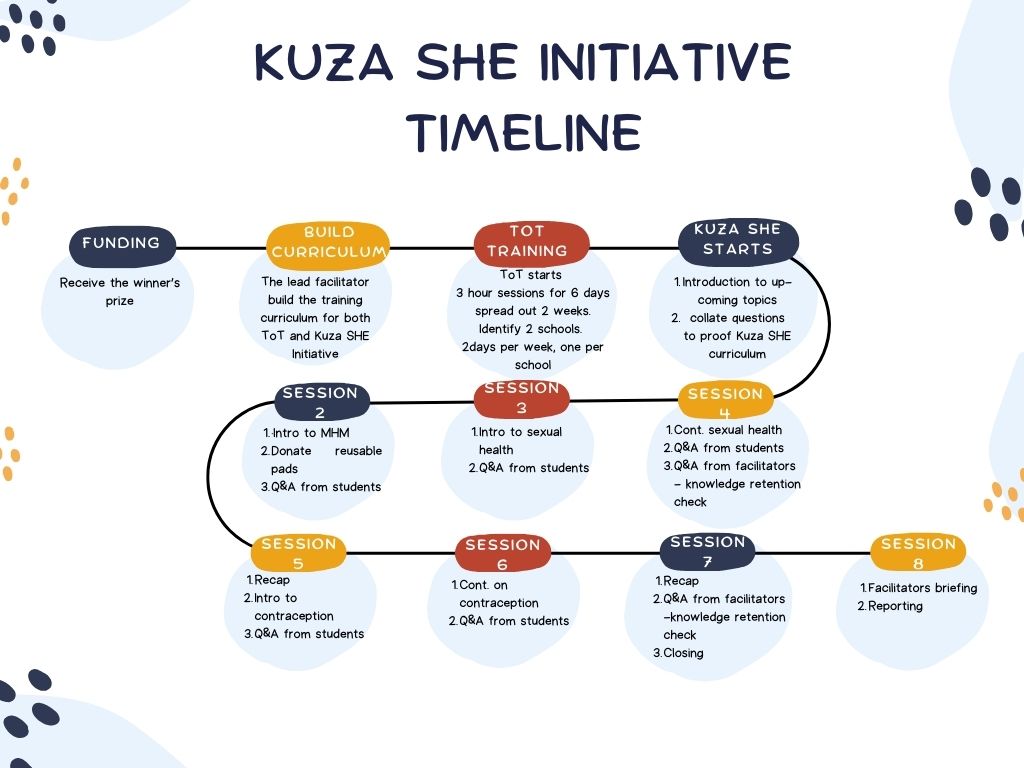
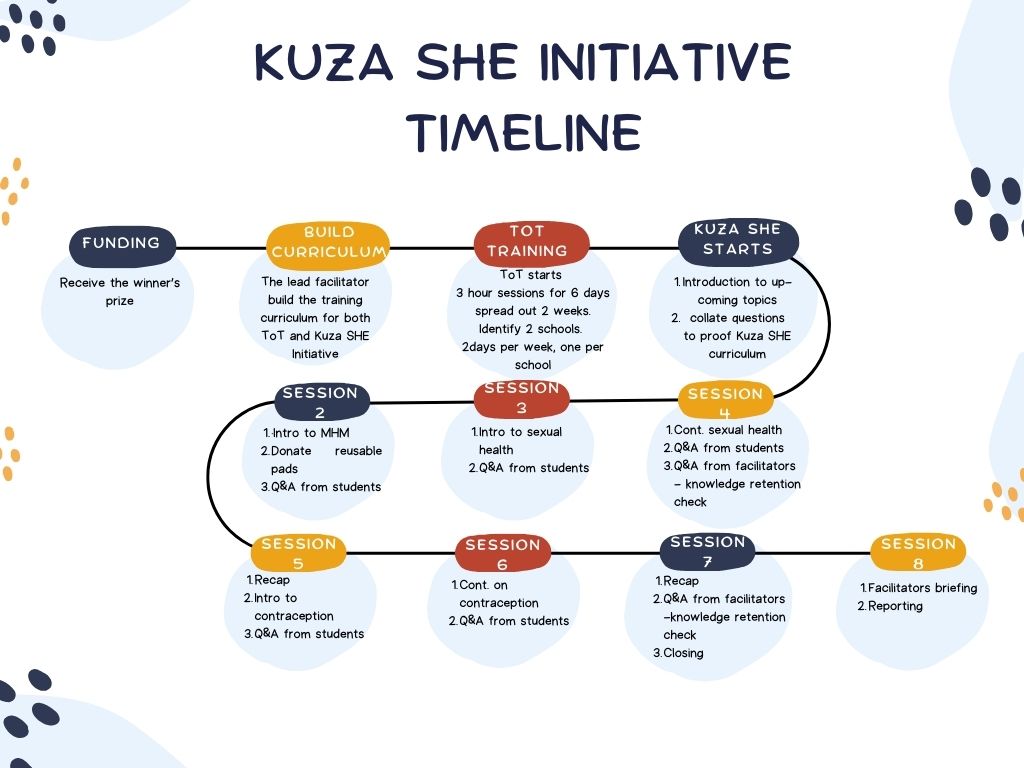
| Implementation Plan: | The implementation of the Kuza SHE initiative starts with the lead facilitator creating a curriculum for the training of trainers (ToT), the already identified trainers are Community-based Volunteers (CbVs) who are passionate about improving access to SRHR. The ToT will be carried out in 6 days across 2 weeks in consideration that the CbVs have other commitments. After the ToT, we will collectively identify 2 schools with an average of approximately 150 girls in their form 1 and form 2, who will receive the reusable menstrual kits and take part in the SRHR discussions. The Kuza SHE intervention will stretch over 2 months for each school, with 2-hour sessions every week. |
| Supporting Materials: | |
| Confirmation: |
|